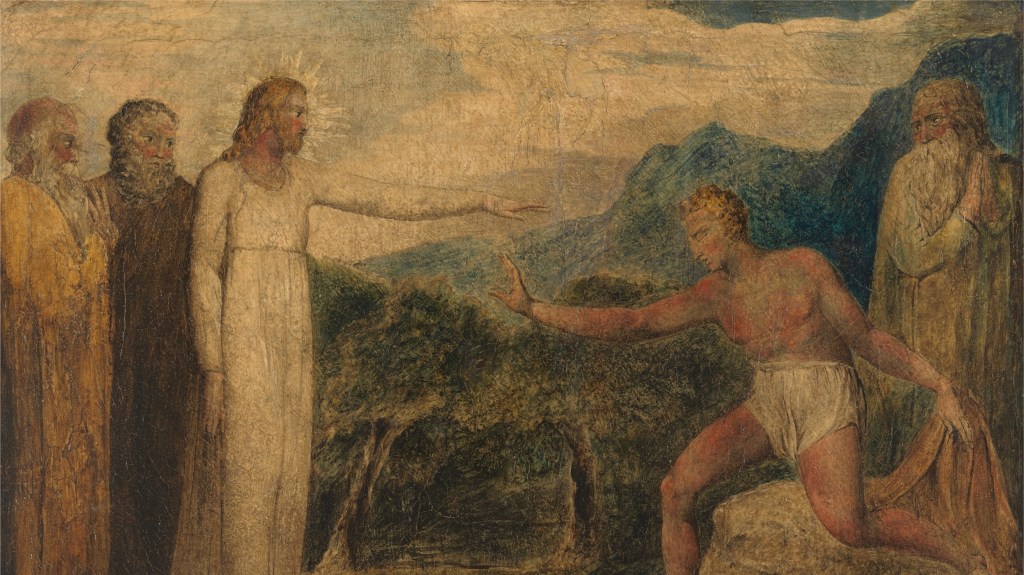
He said to them, “He put mud on my eyes. Then I washed, and now I see.”
Mud brings up images of lawns and parks after heavy rainfall, dogs hastily scrubbed with towels, footwear being rinsed with a hose and scrapped on mats. Growing up, mud was to me more of a nuisance than a natural element; I avoided it as best as I could, wearing thick boots to protect my feet and avoiding areas with large puddles or steep slopes on rainy days.
Mud stains things; it obscures windows and soils clothes. But mud also creates, with its formation into clay lending it to be used in ceramics and pottery. Not only can mud be thrown at a wall or stained along the hem of a skirt, it can be molded, shaped, and fired into a vast diversity of vessels and artworks.
Taking ceramics as my eighth grade elective finally got me in the mud sort of speak. While the thought of creating things like spoon holders and cups was alluring, I was weary of getting clay under my fingernails and embarrassing myself through amateur mistakes.
Becoming accustomed to holding and shaping clay was difficult in itself. It was soft yet hard, flexible yet brittle, wet yet dry. I was already not a fan of mud on my shoes and clothes, so having a slightly more refined version of it on my hands was awkward at best.
But within the first few weeks of the semester, I no longer saw clay as a less-cumbersome, repackaged mud but instead as a tool to make things of use. We would be tasked with creating spoon rests and containers, bowls and cups—things that most of us use daily yet likely do not think much of.
Water and dirt—that’s all it takes to make mud. But saliva and dirt—that seems off.
It’s difficult for me to think of spit and saliva in a positive light. To spit on something or someone is generally understood as an expression of disgust, anger, disrespect, and even power imbalance.
But Jesus did not spit on the man before him but on the earth under him, not to spite the dirt but to sanctify it—just like how he plunged into the River Jordan to sanctify the waters we and countless others have been baptized in. Through the act of spitting—both disturbing and disrupting—Jesus blessed the very ground they were on.
The water—the spit—from Jesus’ mouth is the same “still water” spoken of in Psalm 23. You see, the “still waters” this psalm speaks of are not sourced from melted glaciers or offshoots from streams or the idle supply from a well; these “still waters” find their source in the Living Water we encountered last week alongside the woman with her clay jar. God does not lead us just to any water source, but to Godself who refreshes, replenishes, renews, and resurrects in this eternal outpouring of Grace.
By the simple yet uncomfortable act of spitting on the ground, Jesus made mud—the very thing from which the poetry of Genesis says was used to mold and form Adam. It is from the very mouth of God that all creation was spoken into being when “God said…,” so how fitting it was for the Word made flesh—Jesus himself—to shape creation again in this way.
The rubbing of mud on the man’s eyes by Jesus is not too far removed from the rubbing of oil on David by Samuel, for both are anointings—the marking of someone as blessed and sent by the Divine. Remember those baptismimal waters I mentioned earlier? Let’s not forget what immediately followed it: oil, which was used to anoint us and be marked as Christ’s own for ever.
These elements from the earth—oil and water—were brought forth and made sacred through the power of the Word who created. And we have been sancitifed too; by God ‘s power, we are dust, salt, light, and mud.
Fundamental to ceramics—just as much as clay—is something called slip, a slurry made of liquid mud, or clay mixed with water to make more of a paste than a solid. Slip’s primary purpose is to serve as a binding agent, an adhesive which holds the various components of a ceramic work together.
For us, Christ himself is slip, the one who binds and holds the things of this earth which, though fragile and finite, is made whole.
By anointing the man and his eyes with mud, Jesus rebinds the man to his community—to the people who, for most of his life until that point, only saw him as a “beggar” and a person who was “blind from birth”—making them whole once again. So too was David rebound to God’s people by his anointing—marking him as king to steward Israel in their pilgrimage to wholeness.
Fragile and finite, yet called to do things greater than we can imagine so that “God’s works may be revealed in us” just as Jesus said.
Once a bowl is made, it can be used to hold stew distributed by a pop-up kitchen in a park. Once a cup is made, it can be offered to someone who’s running a marathon to raise money toward medical research. Once a vase is made, it can hold a bouquet of flowers to bring to the bedside of a person who is in the hospital and has no loved ones to keep them company. God’s work in these items of mud and clay is not revealed by what they are, but how they’re used.
Friends, we are made and then used, not within the Capitalist framework of transaction and consumption, but within the Gospel’s framework of community, communion, and collaboration—which, when brought together, bring us ever closer to the wholeness and healing God desires for us all.
“Go, wash in the pool of Siloam (which means Sent).” Go, be sent. We are made and then used; we are formed and the sent. Sent out to do what, exactly? To bear witness to what has happened to us, “He put mud on my eyes. Then I washed, and now I see.” Amen.
This text is of a sermon I wrote and preached for the Fourth Sunday of Lent (Year A), with the scriptural passages set out by the Revised Common Lectionary.
The scriptural passages assigned to the Fourth Sunday of Lent (Year A) by the Lectionary are 1 Samuel 16:1-13, Psalm 23, Ephesians 5:8-14, and John 9:1-41.
This sermon was preached at my home congregation of St. James’ Episcopal Church in Fremont, CA—within the Episcopal Diocese of California. Linked here is the service recording/livestream, with my sermon beginning approximately at 24:50.

 John Lee Wagas
Leave a comment