Human fragility is oftentimes most evident in the lives of persons who wield considerable authority and power—for when one seems to be at the height of apparent success, there is no way but down.
This fragility primarily lies in the folly of pride—for while a healthy self-confidence can propel oneself into opportunity and growth, a toxic egotism can lead to a person feeling intense dissatisfaction despite appearing prosperous at face-value. The desire to carve for oneself an exultative epitaph can end up being a vain pursuit that results in one being forgotten within a generation or two.
Those who appear to be bulwarks can in-fact be hollow shells that can easily collapse within themselves. That which appears to soar to heights unknown by the masses is likely to come plummeting down to earth either in a pitiful display of hubris or a surrender to the finitude of life itself.
After downfall and collapse are remains—the ruins, remnants, and fragments of that which once existed. It is no more, no longer active or growing, yet still lingering in the things which it begat.
I met a traveler from an antique land,
Who said—“Two vast and trunkless legs of stone
Stand in the desert. . . . Near them, on the sand,
Half sunk a shattered visage lies, whose frown,
And wrinkled lip, and sneer of cold command,
Tell that its sculptor well those passions read
Which yet survive, stamped on these lifeless things,
The hand that mocked them, and the heart that fed;
And on the pedestal, these words appear:
My name is Ozymandias, King of Kings;
Look on my Works, ye Mighty, and despair!
Nothing beside remains. Round the decay
Of that colossal Wreck, boundless and bare
The lone and level sands stretch far away.”
Ozymandias, Percy Bysshe Shelly
Whether it is in stone or ink, in the mind or the heart, the legacy one seeks to leave behind is as finite and fragile as we humans are. We are neither immortal nor immune, and therefore succumb to the limits of time, the uncertainty of life, the power of nature, the decay of memory, and the loss of presence.
It is at the feet of Ozymandias, Rameses II, that we encounter a fractured presence—that of the king who once was and his kingdom which is no more. He is there but he is not at the same time, somehow present yet absent. His is not as he once was or what he desired to be.
Those wanting to have a sculpture made of themselves cannot desire this for any other reason than hubris, while sculptors creating such images of others do so either because of commission, coercion, or admiration.
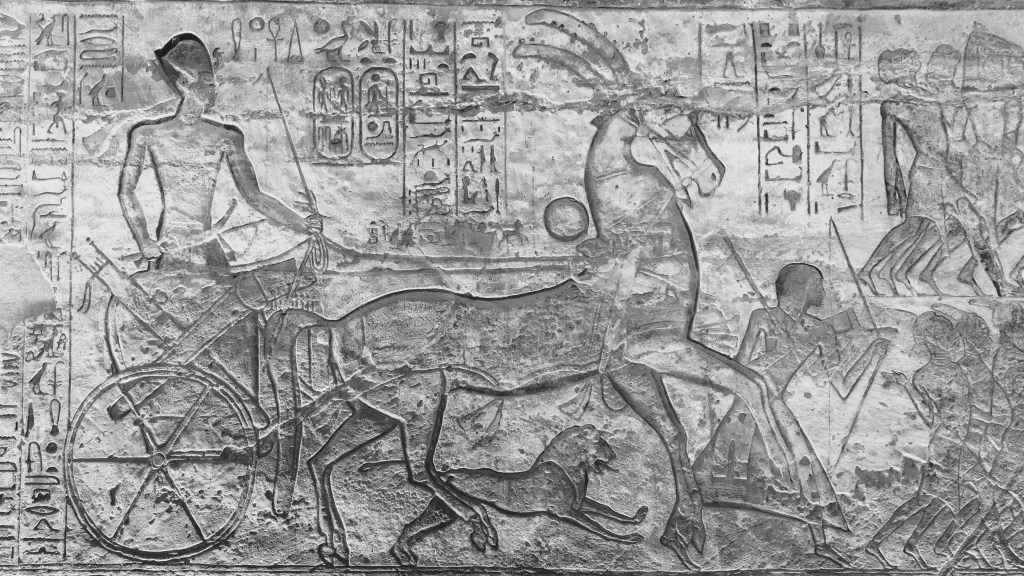
Through the sculptor’s hands, stone—itself a lifeless material—is transformed into a means of preserving life, seeking to ensure that the subject endures in the living memory of generations afterward. But time does not forgiver, human memory is only so strong, and nothing is certain.
Neither Ozymandias’ crown nor his face nor his regaled chest stand; it is his feet, on which he planet on the earth beneath him, which pathetically stand amidst the barrenness of a vast desert.
The coarse, abrasive, and rough nature of sand parallels the reality of life, for its complexities and limitations cause us humans to become rugged, worn, and weathered.
Carved into the pedestal is an inscription which commands us to “despair,” supposedly at the immeasurable, unparalleled magnificence of Ozymandias and his realm. In other words, he calls us to bask in his glory while recognizing ourselves to be unworthy of such brilliance. But we do not grieve for ourselves who are incapable of matching such splendor, rather, we are more likely grieve for this king who has long succumbed to time and space.
Yet we mock him for the irony of it all. The works we are called to admire are but dust and rubble. The life which Ozymandias sought to immortalize in kingdom and monuments have met their demise. It is indeed a “colossal Wreck,” a sobering reminder that not only do the mighty fall, but that even we who are common will be buried in the same earth as the noble and will face the same uncertainty at the end of our days.
 John Lee Wagas
Leave a comment