It is said that people who refuse to recognize the flaws in something are wearing rose-tinted glasses—willingly and consciously denying an aspect of reality and choosing to stick with their own version of current affairs.
Maybe they hate to see something they hold dear unravel before their very eyes. Or maybe it’s the belief that the dominant narratives are false, and that whatever is being said out there just can’t be true. Whatever it is, those who dawn these glasses do so out of denial—to some extent.
For some within the Church, it can be said that they are wearing stained glass-tinted glasses—lenses that allow them to be hooked on the narrative that the Church is not only as robust and steadfast as ever, but that the state of affairs in the “secular world” is far worse than itself.
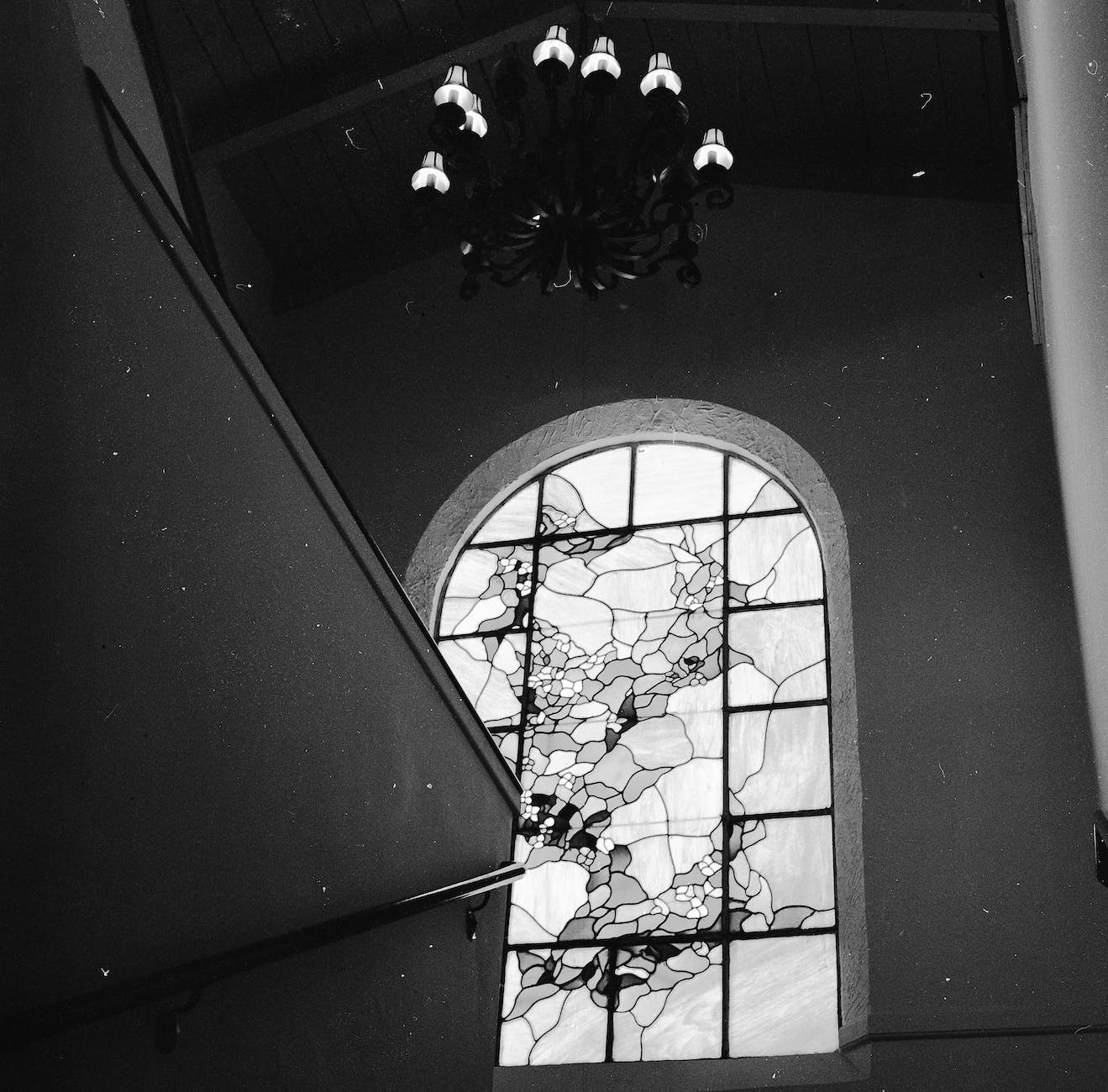
Those who propagate such a belief are ones who tend to ascribe to an authoritarian, legalistic ecclesiology—one that is likely to define things based on concrete binaries and enforce strict boundaries.
To think that “church affairs” are far more stable, manageable, and generally calm than “secular affairs” is, at the very least, foolish and, at most, insane. This is a textbook case of “pull the log out of your own eye before you poke the twig out of someone else’s,” and is even more poignant as it occurs within the Church itself.
Recent decades have unraveled many uncomfortable, evil truths that have plagued the Body of Christ, both in the United States and on a global level. Revelations of sexual abuse, financial misappropriation, spiritual manipulation, organizational mismanagement, and a wider culture of cover-up have resulted in religious trauma, institutional mistrust, intense legal proceedings, and the loss of faith.
That same legalistic, authoritarian ecclesiology mentioned before still persists in some faith communities, within and beyond Christianity. Such an unfortunate reality as this leaves many within and outside the faith to be rightfully enraged while overall progress seems sluggish (if occurring at all).
In a significant portion of these reported cases, the cover-up was just as bad as the crime. Those who were complicity in the cover-up—whether they be clergy and laity—in their own ways dawned their stained glass-tinted glasses, believing such scandals, harms, and crimes either being one-off occurrences or irrelevant to the Church’s broader mission.
By clinging on to their spectacles, the clergy and laity complicit in the cover-up hide their insecurities behind a facade of stability, and choose to look through stained glass rather than see the state of things as they truly are. Instead of seeing the world as it is, they choose to see things in alignment with what they want it to be.
Blessed are those who hunger and thirst for righteousness, for they shall see God, Jesus speaks in Matthew’s Gospel.
Indeed, blessed are those who hold on to hope, who bear a holy rage at injustice, who do not turn a blind eye to suffering, who rush over to comfort the afflicted, who affirm the experiences of those in pain.
Blessed are those who hunger and thirst for righteousness, for they shall see God
Matthew 5:29-30
It is these same people who have not only cast away the stained glass-tinted glasses of toxic faith, but have similarly broken windows in order to truly let the light in—to allow God’s grace and the human experience to transform us both as individuals and as a community.
Sometimes things need to be broken down before they get fixed. And sometimes the windows which have provided us a particular view of our environment for so long must be shattered in order for them to be restored, their once-flawed fragments being replaced by pieces that are evermore whole, transparent, and luminous.
There are windows to be broken, shards to pick up, fragments to be restored, and windows—both old and new—to be put back in their places, in order to let the light of truth, love, and justice in.
 John Lee Wagas
Leave a comment