Being and becoming. In being, something is, existing as it is. In becoming, one is actively in the process of change. In both, the subject in question is engaged in a dynamic existence marked by transformation, movement, alteration, and transcendence.
While this may seem like lofty metaphysics (although to a degree, it is), everything in existence is inherently engaged in being-becoming. These two verbs are deeply interconnected, for they are both central aspects in the movement toward something.
Yet a third aspects, between being and becoming, is as crucial as the others—receiving.
Take the example of a couple who become parents. By being, the couple are as they are—individuals who have entered into relationship together. In having a child, either through birth or adoption, they become parents. Yet between the being and becoming is receiving—in this case, the reception of their new child. It is in the reception that these two individuals are transformed, remaining the same in some ways but become different in many others. They become tasked with new responsibilities, new energy, new motivation, and their identities are further developed.
This is not to say that their being—the very ground and nature of their existence and identity—is being uprooted. On the contrary, it is evermore grounded in light of, rather than in spite of, their becoming. Their identities are not negated but developed, neither forward nor backward but outward—beyond themselves in recognition that there is more to existence and life than themselves.
In being-becoming, the subject in question is transformed—engaging in that aforementioned movement that is, paradoxically, as outward as it is inward.
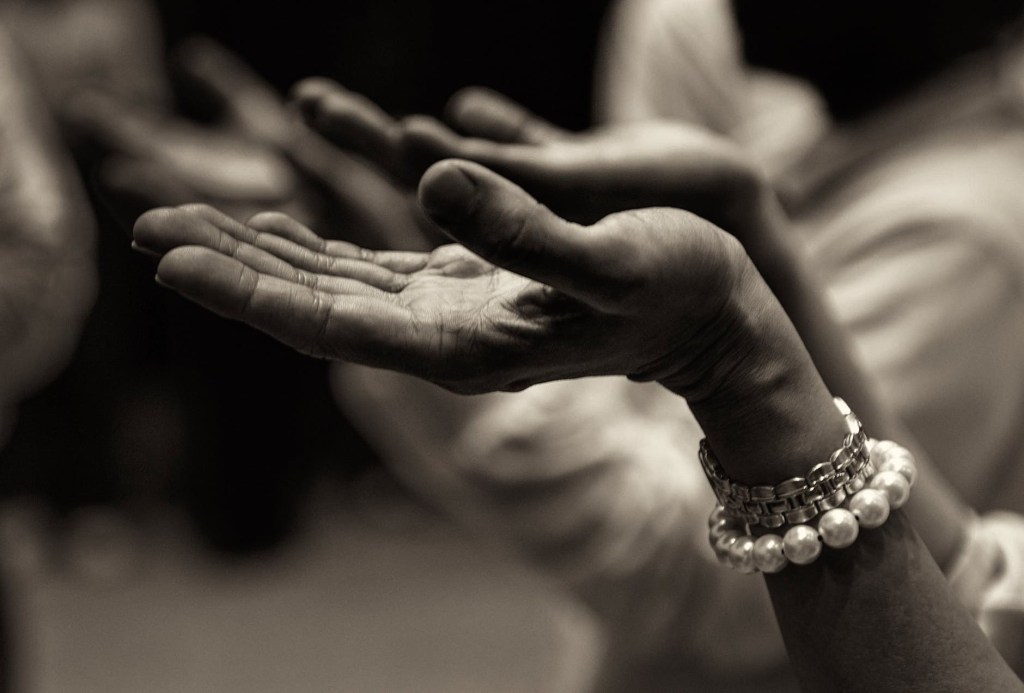
In opening our hands for a piece of bread broken from a loaf or neatly formed wafer and in grasping the stem of a cup and steadily bringing it to our lips as we take a sip of wine or grape juice, we are not merely eating, but receiving.
Just as we open the doors to our homes so that guests may enter, so too do we open our hands to accept the bread and wine, common staples of our daily diets in our time and throughout history, which have been blessed, broken, and now being shared with us.
We receive Christ as a guest in our bodies, souls, and hearts—embracing Him as much as He embraces us. Yet in receiving Jesus, we are not only bringing him into our midst, but also allowing him to shape us as people moved by Love.
In receiving the Body of Christ, we become the Body of Christ. We become what we receive.

Yet what does this mean for us as people? To me, it is grounded in the realization that we are compelled to imitate Jesus. As we absorb him into our bodies, we are called to embody him.
This does not mean that we are to perform miracles or cast out demons, handle snakes or walk on water. Far from it. Rather, we are to embody Love through understanding, community, generosity, and justice. We must work to care for the natural world, combat totalitarian regimes, eliminate discrimination based on gender identity or sexual orientation, foster cooperation between all groups and identities, and seek to achieve social and economic equity for the marginalized.
The Gospel is not theoretical, it’s practical. It’s pragmatic—something to be lived out than reflected on, to be made evident in our hands and legs than the invisible thoughts lingering in our minds.
I myself, I’m the bread of life
Bread of Life | Written & Composed by Rory Cooney
You and I are the bread of life
Taken and blessed
Broken and shared by Christ
That the world might live
Just as Rory Cooney says in his hymn Bread of Life, we are “taken” and embraced in the compassionate arms of God, “blessed” as we are identified by the divine as sacred and important, “broken” not down but opened up in humility so that we may enter into the world with understanding and compassion, and “shared” so that we may use our gifts to bring light where there is darkness and that the “world might live” in the spirit of Love.
Just as we open our hands to receive the bread and wine. we open ourselves up to Jesus’ exhortations, “Love one another as I have loved you…Love your neighbor as yourself.” In receiving the God who is Love, we are to embody that same Love in our homes, in our friendships, in our workplaces, and in our world.
 John Lee Wagas
Leave a comment